





Exhaustion the space for radical renewal is a research led creative project that explores exhaustion not as despair, but as a productive provocation. Drawing on philosophical discussions of exhaustion and absurdity (Sartre, Camus, Zurbrugg), the project examines exhaustion as a threshold state where repetition, fatigue, and breakdown create conditions for new thought and action. Rather than approaching exhaustion through lived experience, the research situates it within cultural, material, and visual systems.
The project investigates how repetitive culture produces an exhaustion of ideas across art, AI, architecture, and fashion (in dialogue with thinkers such as van Herpen, Frichot et al.). In visual art and digital practices, sameness emerges through repeated styles and techniques; in fashion, historical ideas are recycled until displaced by radical innovators such as institutions like Bunka Tokyo. Architecture becomes a visible site of exhaustion through homogenised housing developments along Australia’s east coast, contrasted with the textured, adaptive environments of informal settlements elsewhere.
A further strand connects material fatigue, environmental degradation, and the body. Materials fail under cyclic stress, landscapes erode through overuse, and bodies experience exhaustion through dysmorphia and “looksmaxing,” where renewal is sought through reconstruction. By visualising exhaustion through digital technologies, performance, installation, and writing in the public space, this project invites audiences to recognise exhaustion as a generative space for radical renewal.

Exhaustion
the space for radical renewal
Exhaustion the Space for Radical Renewal demonstrates ambitious thinking by reframing exhaustion, not as failure, but as a generative threshold where belief, belonging, and becoming can be re-imagined.
Currently thinking of a whole of community approach to programming so that each iteration has its own voice and space. Read through the notes and let me know what you think.
New ground.120326
After an all too brief discussion with Dr Keith Armstrong (QUT) whose research includes; social and ecological justice, a refinement of the idea and a clarification of thought is required. The word exhaustion invokes an immediate sense of tiredness and a lack of enthusiasm. The project(s) philosophical shift to focus on the outcome of that exhaustion, the ‘radical renewal’. The space for radical renewal, what can be the new ideas, products or thoughts that arise from this generative threshold.
Again a all too short meeting with artist Lily Rose helped to bring the broader ideas into focus, as They begin to develop ideas of the body as a site of performance, low-fi and dangerous. After a prolonged period of health issues a radical formation of ideas is becoming a reality.
Research Notes and web links including samples of how the idea gestated. This section will be elaborated on over time.Phase of Nothingness–Water
https://publicdelivery.org/nobuo-sekine-phase-of-nothingness/
reducing industrial objects to their bare forms
see 21/21 gallery, Tokyo
exhaustion the space for radical renewal
https://link.springer.com/article/10.1007/s11097-025-10115-1
The conversation about burnout as rebellion continues in ways that don’t require your participation. Sometimes the most radical act is to stop. To let the systems run without you for a while. To discover what remains when the performance finally ends.
Phenology is the study of seasonal timing in nature, focusing on recurring plant and animal life cycle events like leaf budding, bird migration, insect hatching, and flowering, and how these are influenced by climate and environmental changes. It acts as a crucial indicator of ecological shifts, revealing how species respond to factors like temperature and rainfall, making it vital for understanding climate change impacts and ecosystem health
The space between exhaustion and renewal socially and environmentally
Conceptually, burnout is defined by two distinct components (Demerouti et al., 2003). The first is exhaustion, capturing experiences of feeling drained and weary. The second component relates to disengagement, which involves distancing oneself from the stressor (in this case, action to combat climate change; Demerouti et al., 2003).
Bird et al. (2024) show that political despair has a positive relationship with burnout (as measured and conceptualised by Malach-Pines, 2005). The Malach-Pines (2005) burnout measure reflects the exhaustion dimension of the current conceptualisation of burnout.
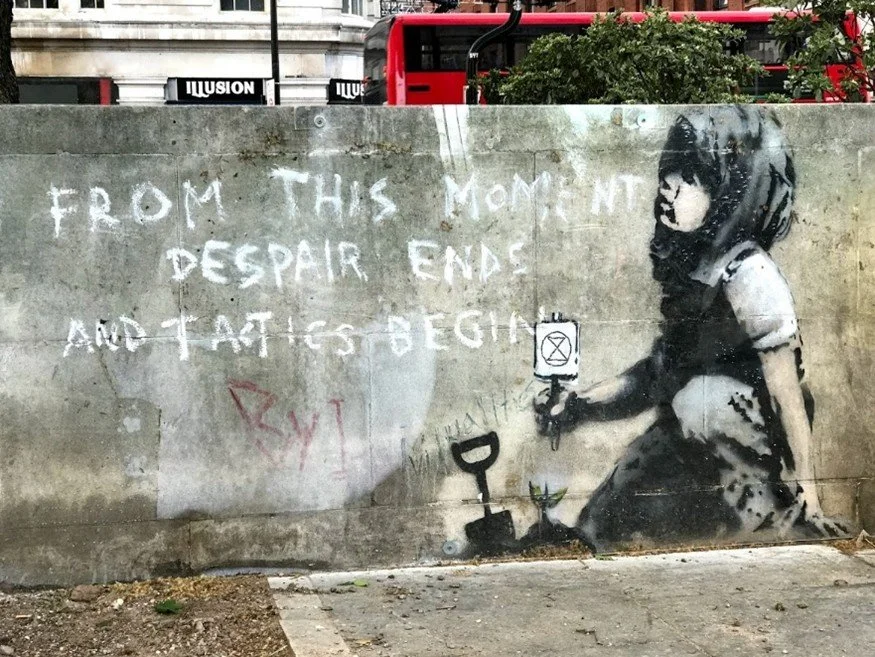
These findings suggest that the link between climate despair and exhaustion needs to be addressed. Furthermore, we found that asking people to consider the necessary steps required to bring about climate action (pragmatism alone), consistently reduced people's disengagement from the movement. This message is reflected in street artist Banksy's mural near London's Hyde Park in support of Extinction Rebellion protests in 2019, “From this moment despair ends and tactics begin”.
https://www.sciencedirect.com/science/article/pii/S0272494424001555
The accompanying picture shows a child planting a seedling and labelling it with the extinction symbol, which is the logo of Extinction Rebellion.[5][6]
From this moment despair ends and tactics begin is a stencil mural at Marble Arch in London by the graffiti artist Banksy. It was created during Extinction Rebellion protests in London in 2019 when Marble Arch was a base for the protestors.[1]
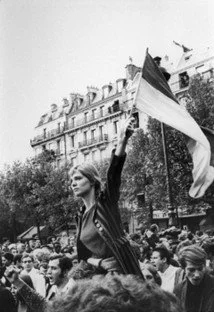
The slogan is a quotation from The Revolution of Everyday Life by the Situationist philosopher Raoul Vaneigem.[2] This book was first published in 1967 as Traité de savoir-vivre à l'usage des jeunes générations and inspired many such slogans painted as graffiti by Paris students during the unrest of May 68.[3] It then inspired British revolutionaries such as the Angry Brigade.[4]
Demonstration in the Quartier Latin in Paris, 1968. Caroline de Bendern holds a Vietnamese flag on the Boulevard Saint-Michel. Photograph: Jean-Pierre Rey/Gamma-Rapho via Getty Images
She was disinherited and exiled to the UK
Creative/ philosophy
The state of exhaustion is the ability to do nothing be incapable of doing anything in itself is something to do. A child says I am doing nothing! (Don’t accuse me of doing what I am doing). B
wikipedia
"Nothingness" has been treated as a serious subject for a very long time. In philosophy, to avoid linguistic traps over the meaning of "nothing", a phrase such as not-being is often employed to make clear what is being discussed.
https://english.stackexchange.com › questions › im-not-...
The expression I am not being is a correct form if you need to create a passive sentence in the present continuous tense.
Tabula Rasa, the nothingness of being.
St. Augustine had more conservative counsel: we should not start at the beginning, nor at the end, but where we are, in the middle. We reach a verdict about the existence of controversial things by assessing how well these entities would harmonize with the existence of better established things. If we start from nothing, we lack the bearings needed to navigate forward. Conservatives, coherentists [So exactly what does coherentism have to say regarding when our beliefs are justified? The strongest form of coherentism says that belonging to a coherent system of beliefs is
necessary for a belief to be justified and
by itself sufficient for a belief to be justified.
and scientific gradualists all cast a suspicious eye on ‘Why is there something rather than nothing?’] https://iep.utm.edu/coherentism-in-epistemology/#:~:text=Coherentism%20is%20a%20theory%20of,%E2%80%9Ccohere%E2%80%9D%20with%20one%20another.
https://plato.stanford.edu/eNtRIeS/nothingness/
Eastern
Much of the content researched is western and possibly colonial in its thinking. Being in a Eurocentric and colonial settler country like Australia the author feels that there is large swathes of knowledge being ignored by the algorithm. 17.4*/* of the population is Asiatic background.(2021 Census). There has been no access/opportunity to Australian Indigenous input as of writing.
The understanding of "nothing" varies widely between cultures, especially between Western and Eastern cultures and philosophical traditions. For instance, Śūnyatā (emptiness), unlike "nothingness", is considered to be a state of mind in some forms of Buddhism (see Nirvana, mu, and Bodhi). Achieving "nothing" as a state of mind in this tradition allows one to be totally focused on a thought or activity at a level of intensity that they would not be able to achieve if they were consciously thinking. A classic example of this is an archer attempting to erase the mind and clear the thoughts to better focus on the shot. Some authors have pointed to similarities between the Buddhist conception of nothingness and the ideas of Martin Heidegger and existentialists like Sartre,[23][24] although this connection has not been explicitly made by the philosophers themselves.
In some Eastern philosophies, the concept of "nothingness" is characterized by an egoless state of being in which one fully realizes one's own small part in the cosmos.[dubious – discuss]
The Kyoto School handles the concept of nothingness as well. - The logic of basho is a non-dualistic 'concrete' logic, meant to overcome the inadequacy of the subject-object distinction essential to the subject logic of Aristotle and the predicate logic of Kant, through the affirmation of what he calls the 'absolutely contradictory self-identity' — a dynamic tension of opposites that, unlike the dialectical logic of Hegel, does not resolve in a synthesis. Rather, it defines its prop https://www.abc.net.au/religion/living-our-fatigue-philosophy-for-an-exhausted-age/13343166 er subject by maintaining the tension between affirmation and negation as opposite poles or perspectives. Wiki
Needs more research not google western version
https://www.abc.net.au/religion/living-our-fatigue-philosophy-for-an-exhausted-age/13343166
below
‘On the other hand, a person can stop, slow down, and begin to identify, scrutinise, and resist the onslaught of demands in a distracted “achievement” society that are colonising forces dictating efficiency and realization of our “full potential”. Such stoppages often occur at the point of exhaustion, at our breaking point, where we, as Sara Ahmed puts it, “snap”. There is a way in which we must listen to the forbidden and desperate I can’t, and turn it into a rebellious I won’t. “A crisis”, Ahmed writes, “can also be an opening, a new way of proceeding, depending on how we do or do not resolve that crisis.”
Material
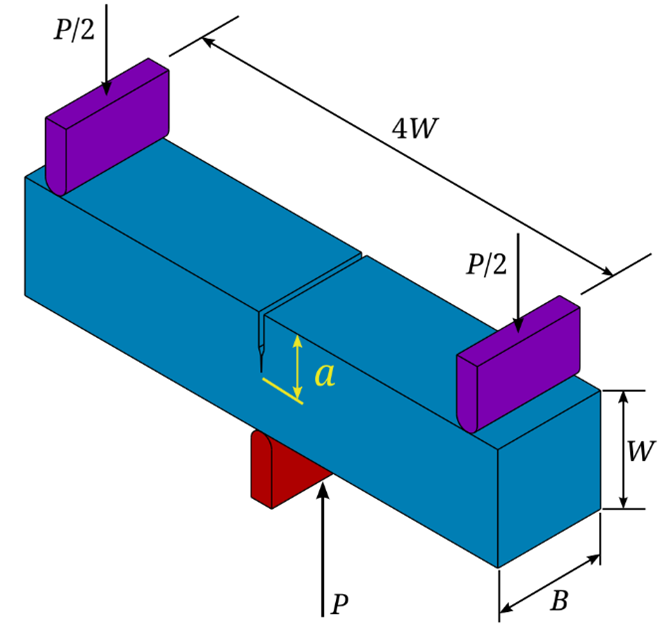
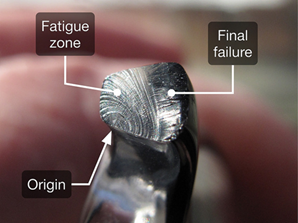
in materials science, fatigue is the initiation and propagation of cracks in a material due to cyclic loading. Once a fatigue crack has initiated, it grows a small amount with each loading cycle, typically producing striations on some parts of the fracture surface. The crack will continue to grow until it reaches a critical size, which occurs when the stress intensity factor of the crack exceeds the fracture toughness of the material, producing rapid propagation and typically complete fracture of the structure. Wiki
https://yenaengineering.nl/what-is-metal-fatigue-an-overview/
‘The number of accidents due to fatigue failures is several in numbers. Thus, the mechanism of fatigue must be well-understood for having solid knowledge on failure mechanisms. Before starting the mechanism of the fatigue (crack initiation, crack propagation, and final fracture), it may be beneficial to discuss the term ‘cyclic loads.’ As mentioned before, cyclic loads that are applied on a material may result in the failure of the material even if the loads are lower than the tensile stresses. The cyclic loads can be defined as the continuous stresses that are applied to the material in opposite directions (not always, but in general). Therefore, the tensile and compressive loads generally form fatigue cracks on the body of metal.’
https://yenaengineering.nl/what-is-metal-fatigue-an-overview/
Materials fatigue is caused by cyclic or repetition of stress like a bicycle pedal going around and around and around until it breaks after 40 million rotations. The space in the fracture of mental and metal
The space in time of nothing - a non action to the next action
Identity nothingness
Identity and nothingness explore the human condition: our sense of self (identity) versus the potential void or lack of inherent meaning (nothingness), with philosophies like Sartre seeing nothingness as freedom to create self, while some spiritual views see it as releasing attachments for spaciousness, contrasting with psychological identity crises where a lack of self feels distressing. It's a spectrum from defining self by external roles (roles, achievements) to realizing our core nature is beyond things, a concept often linked to freedom or profound peace.
Summary
Sartre's philosophy emphasizes the relationship between consciousness and nothingness, asserting that consciousness is defined by its ability to negate and create freedom, which is essential for self-identity. The concept of an "empty core" suggests that this void can be a positive force, allowing individuals to shape themselves and pursue authenticity, rather than becoming trapped in external roles or identities. Sartre critiques the notion of the unconscious, arguing that individuals are fully responsible for their choices and the self-deception that arises from a lack of authentic self-awareness. Ultimately, the struggle between being and nothingness highlights the human condition, where the desire for being often leads to frustration, while embracing nothingness can facilitate genuine freedom and self-actualization
‘Hell is other people’. No Exit
"Nothing" in absurdism refers to the universe's lack of inherent meaning, creating a conflict with humanity's deep-seated need for purpose, which is the core of the absurd; rather than despair (nihilism), absurdism calls for rebelling against this meaninglessness by embracing life's contradictions, creating personal meaning, and finding joy in the struggle, like Sisyphus finding fulfillment in his endless task. (Rolling a rock up a hill only for it to roll back down again, see Cumus 1960).
The space in the fracture of mental and metal
The space in time of nothing - a non action to the next action
Something from nothing in Engineering
Arc Column
In subject area: Engineering
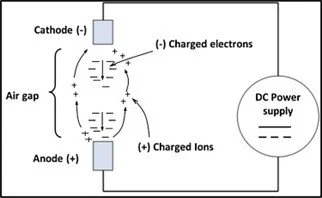
Arc column is defined as the conductive region within an arc welding process where current flows, and its voltage is proportional to the arc length. It contributes to the overall arc voltage, which includes the voltages at the anode and cathode.
The electrical discharge appears when a voltage is applied to an electrode gap in a vacuum.
by recreating the experiment the arc fills the nothing space with electrically charges electrons and Ions the nothing space is filled with a new element. The vacuum is filled.
https://www.sciencedirect.com/topics/engineering/arc-column
False Vacuum decay
Cite this article
A simulation of false vacuum decay using a quantum annealer. Nat. Phys. 21, 351–352 (2025). https://doi.org/10.1038/s41567-024-02767-8
Note from the little notebook
Schwinger effect…
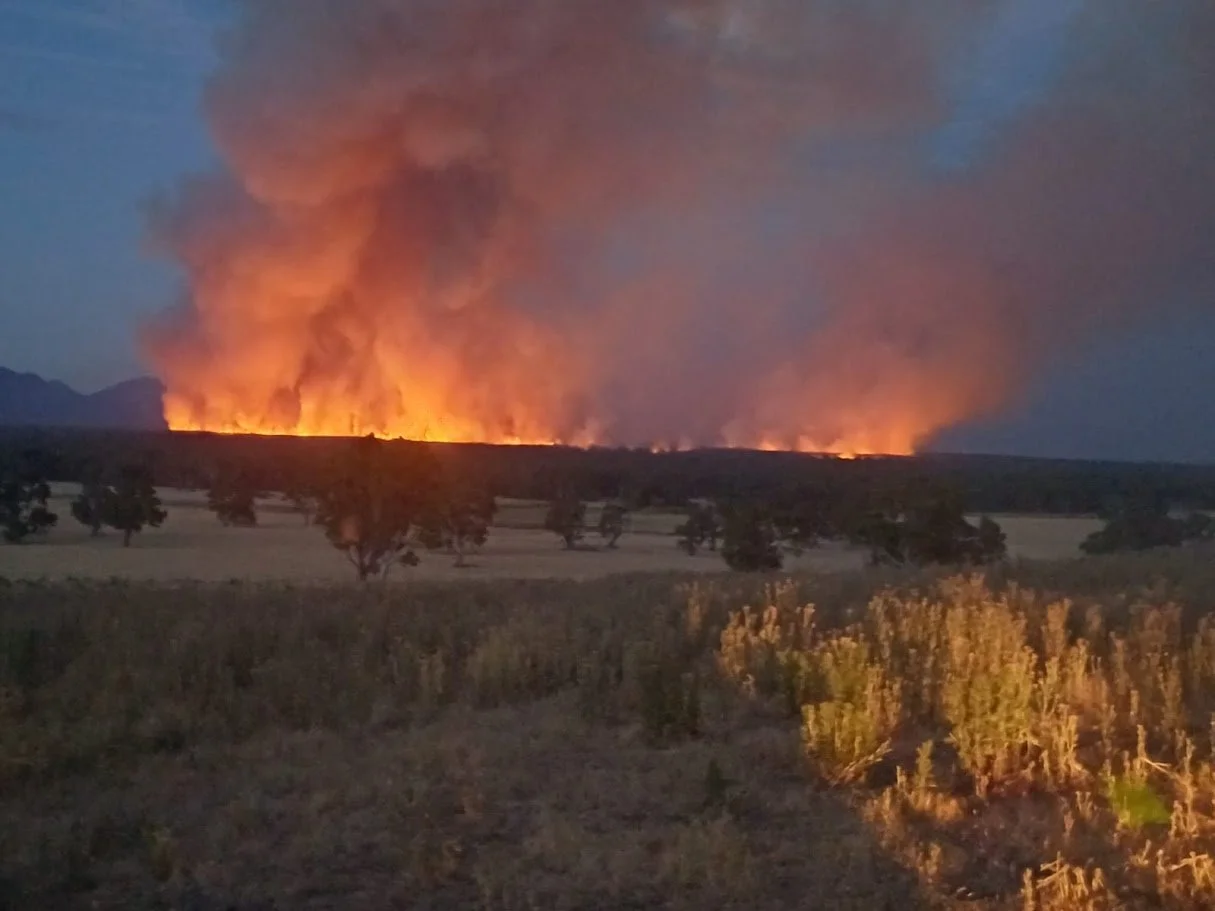
Exhaustion in nature, bushfire (burnout) or a dead tree – moss grows there. - - see Nerang state forest pics.
Reference human – the thousand-mile stare – a blank generation = punkers in the 70’s
A vacuum – devoid of energy and mass – decaying into particles
Exhaustion – looking at the same image repeatedly, it could be the same architectural style –
The repetition of consumerism deadens the spirit of discovery for example the current style of Jeff Koons becomes boring in its highly polished finish and desertification of soul, the architecture of Pimpama housing estate.
Of consumerisms in fashion/ culture/media i.e. Vogue covers Instagram
Film – an exhaustion of ideas until a novel idea from a different culture intrudes on the zeitgeist.
1970s exploitation movies v Asian cult movies (a westie term)
> Stray Cat Rock: Delinquent Girl Boss (1970) HD | Eng Sub
Zurbrugg – an exhaustion of language
Rote leads to and exhaustion of thought from the void is created something A creative thought like moss on the tree in the burnt-out bushland.
ROTE the habitual repetition to create a mechanical knowledge where there is no need for deeper understanding or real life application
The Blank out
Changes come about from exhaustion evolution, the gasping for air from a fragile introspection or a solution to the rage is exhaustion.
Exhausted fashion
body dysmorphia
looksmaxing – the idea that a body is exhausted of its looks or the owner of the said body then looks towards reshaping the body as if a new container of the thoughts has been created.
https://journals.lww.com/prsgo/pages/video.aspx?v=138 plastic surgery privates
Vienna Xtreme
https://www.momu.be/en/exhibitions/girls
Mindy Seu
This Instagram-Stories-as-Lecture format was first conceived of by Julio Correa in Seu’s Lecture Performance studio course (Fall 2023) at Yale School of Art. Seu further developed this format, in collaboration with Correa, for A SEXUAL HISTORY OF THE INTERNET.
Deerhoof/Boris – an example of exhaustion music or is it Brithday Party alah 1980
Send me your thoughts on the form below.
Get In Touch
If you're interested in working with us, complete the form with a few details about your project and how it relates to Exhaustion, a site for renewal theme. Any and all artforms welcome. We'll review your message and get back to you within 48 hours.